A 50% Raise, Paid Zoom Meetings and No Rules for Vacant Seats
In about two hours, SRP's council bylaws committee raised its own pay 50%, made video per diems mandatory with a director's court case pending, and declined to put real rules on filling vacant seats.
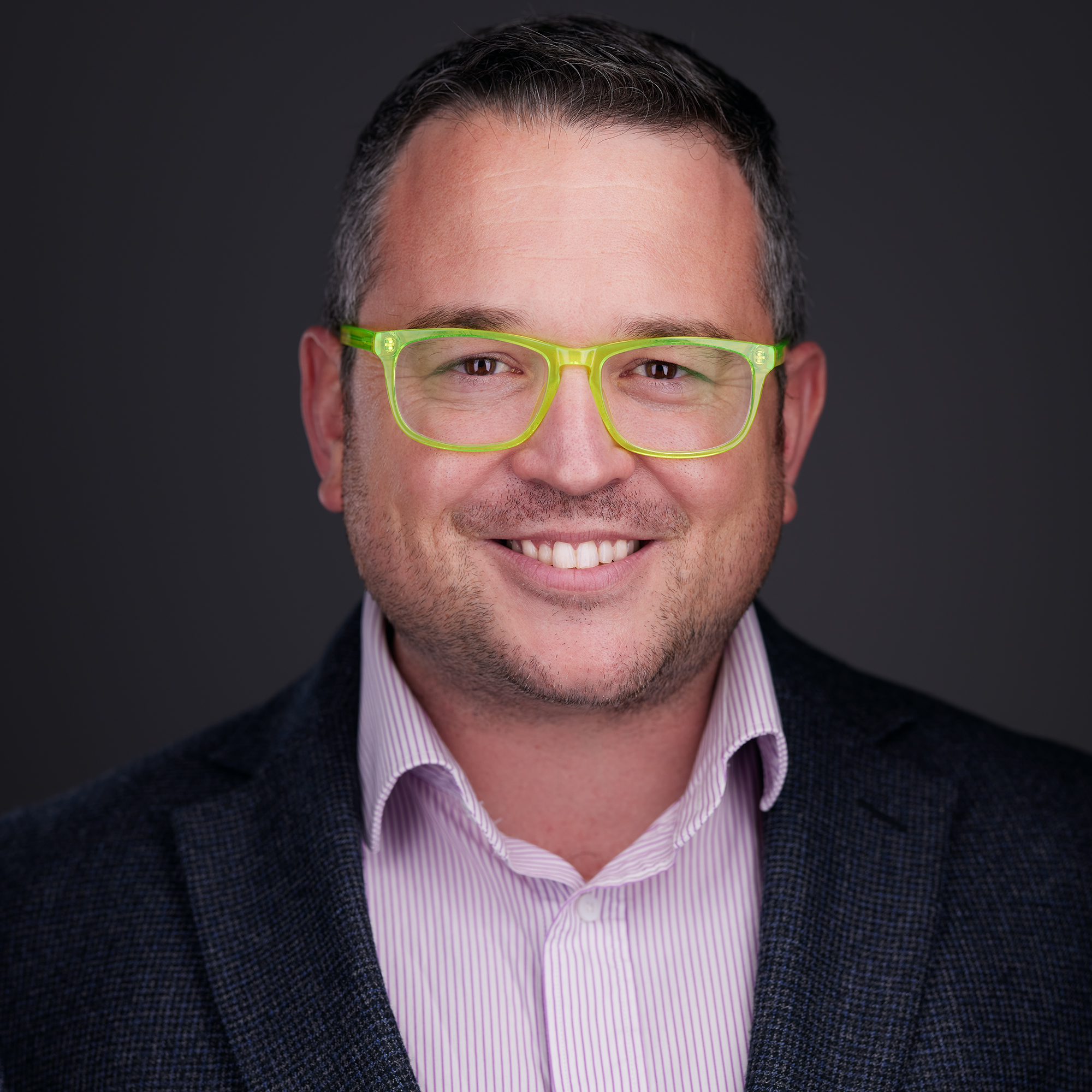
John Travise
SRP Association Council Member, District 6
Army veteran and cybersecurity professional fighting for affordable rates and accountability in District 6.
The SRP District Council’s bylaws committee met Tuesday, September 29. Most SRP customers will never hear about this meeting, so here is a long account of what their elected representatives spent the afternoon on. Brandon Brooks chaired. About twenty people attended in person, by video or by phone.
Act one: the vacancy that went “the wrong way”
Some background. In August, Nick Brown resigned the District 7 board seat. SRP’s 2012 guidelines say a vacant board seat is “typically” filled by a senior council member from that voting area. District 7 had one ready: Eric Gorsegner, its sitting council member. On August 13 and 14 the council instead voted 15 to 13 for Thomas Galvin, a sitting Maricopa County Supervisor and partner at Rose Law Group, whom the district had never met. KJZZ reported the appointment cost the clean energy slate its narrow control of the board.
So Tuesday’s item, reviewing those guidelines, had an obvious reason to be on the agenda. Paul Van Hofwegen said it out loud:
“Seems to me the elephant in the room is there was a name recommended and it didn’t go the way that the final vote was and we’re trying to figure out how we can deter from that.”
Colleen Resch-Geretti, who represents District 7:
“If you’re referring to what just happened, we didn’t even have any introduction to this individual. There was no conversations with this individual. It just happened.”
Nicole Brown said the guidelines work fine and the problem was that “there was some power taken from District 7 for this particular appointment.” Brooks, who chairs the committee, disagreed: districts elect split tickets, he said, pointing to his own District 4, and the council answers to the whole customer base, not one district. He also offered the context nobody disputed: “This is the most polarized this elected body has ever been.” Michael Rakow, weighing whether to open vacancies to people outside the district, put the politics on the table:
“The Solar People last time got, what, 25,000 votes? You know, I got, like, 150.”
Brooks then read the first step of the existing guidelines aloud: “The process will begin with a subcommittee consisting of the SRP elected officials, board and council members within the voting area.” Was one formed for the Galvin vacancy? Brooks wasn’t sure: “There was or wasn’t.” So the guideline everyone is now “reviewing” had its very first step skipped, and its central expectation, a senior council member from the district, ignored.
Two members brought actual rules. Resch-Geretti: the vacant district nominates up to three candidates before the seat opens to anyone else. Gorsegner: publicly notice the seat and take letters of interest for two weeks, the way most public bodies already do it.
The committee adopted neither. Brooks voted to delete the 2012 guidelines entirely and was the only one who did. They survive as they are: customs written with “typically,” which is exactly the word the August vote ignored. Legal counsel Michael O’Connor was asked to draft “options” on timelines, how much deference the vacant district gets, at-large seats, and “possibly” a public notice window, for some future meeting.
My opinion: the vagueness is the point. With no fixed timeline, no public notice and no binding role for the district, whoever holds 15 votes in a given month can put whoever they like in the seat, including someone the district never met, over the council member the guidelines point to. The members who just used that to install Galvin have no reason to write a rule that would stop the next one. Draft “options” that may come back at a later meeting suit them fine.
Act two: paid to attend on Zoom
Next came per diems for attending by video. SRP pays members a per diem for meetings attended in person. The question was whether to pay for virtual attendance too.
Before anyone voted, O’Connor disclosed that there is a case pending at the Court of Appeals over Director Lupe Conchas, who sits on both the Glendale City Council and the SRP board and attends virtually without board compensation. Aaron Herrera asked the natural question: if the committee made payment mandatory, would Conchas have to formally turn the money down? O’Connor’s answer: “If it’s a shall, we don’t have the right to withhold payment. And so therefore, you have to tender it.”
Everyone then said the court case should have no bearing on the decision. Several more minutes went to the court case.
Rakow, to his credit, read the room correctly. He moved to change “shall” to “may”:
“There’s the court case going on right now. I don’t know if it’s our job to weigh in on that court case… I think it’s going to come back upon us if we do that right now.”
His amendment died without a second. Ken Clark, on the phone, tried twice to explain the distinction: SRP “shall offer to pay,” and the member may decline. The response was a “No.” The committee then passed the mandatory version unanimously: up to three paid virtual meetings per calendar year, starting in 2027.
Conchas, who had been listening, spoke right after the vote:
“I was very surprised to hear my name in this discussion on this policy change… I did not hear anything about how this will affect our customers… What I don’t appreciate is that there was more discussion about me and about my role in all of this rather than focusing on the ratepayers.”
Brooks thanked him, called it “a great segue,” and moved straight on to raising the committee’s own pay.
Here’s why the shall/may fight mattered, and why I think it was political. Conchas was expelled from the Glendale City Council in May under the city charter’s ban on holding a second paid public office. His argument in court is that he waived the SRP per diem on the record, so he was never paid. A rule that says SRP “shall” pay virtual attendance, which O’Connor confirmed means SRP must tender the money whether he wants it or not, cuts directly against that argument. Rakow’s “may” would have kept the committee out of it. Clark’s “shall offer to pay” would have done the same. Neither got anywhere. In my opinion, an exemption that let one director keep declining the money was exactly what some members did not want.
A word about the chair
You can learn a lot about a committee from how it’s run. Brandon Brooks chairs this one. His afternoon, in his own words:
- He opened by apologizing “for being tardy today.” Late to the meeting that set his own pay.
- Reading the guideline that says a vacant seat “typically” goes to a senior council member from the district, the one the August vote ignored, he added: “which senior technically qualifies after serving a full term. Just kidding.” The district’s senior council member was passed over six weeks ago. Hilarious.
- Framing the vote on the vacancy guidelines, he described deleting them as leaving “no flexibility and ambiguity.” Then: “And I know we…” A member: “Flexibility.” Brooks: “…we like flexibility, so.” That is the whole argument of this post, conceded by the chair on the record.
- Calling that vote, he asked whether anyone wanted to make a motion to delete the guidelines. Nobody did, so he made it himself: “I’ll motion.” Then: “I reject my motion. I reject my motion.” Then he voted for it anyway and lost to the entire committee: “All those opposed to keeping the guidelines? I guess that’s just me.” Immediately after: “So hold on. How do we do it now?”
- Arguing against letting a district choose its own replacement: “What if… the candidate brought forth has proven not to be a very good council member?” This, about a process whose last result was a county supervisor nobody in the district had met.
- Settling which three virtual meetings get paid: “The first three you come on Zoom? No. If you miss six, the first three you missed, you get paid for.” Then: “It doesn’t matter which three, really.” Then: “Well, the shall makes it matter. The shall makes it matter.” All three in about a minute.
- Thanking Conchas for reminding the room to think about customers, then calling it “a great segue” into raising the committee’s own pay.
- Repeating, with confidence, that SRP pays its elected officials more than APS, a company with no elected officials.
- On the raise motion: “You said 9000. 9072. Where did you get that number?” Then he tried to amend the motion on the floor and needed another member to talk him through it: “This isn’t an act, we’re negotiating.”
- Wrapping up: “Now we’ve got future agenda topics before we close out this bad boy.”
This is the person chairing the committee that writes the rules for how SRP’s elected bodies fill seats and pay themselves.
Act three: the raise
The item was the association’s annual remuneration for elected members, $5,000 a year and unchanged since 2019.
T. Suzanne Naylor did what nobody else bothered to: she added it up. About a third of SRP’s customers, roughly 350,000 accounts, are below the poverty line and qualify for SRP assistance. The lowest household income she saw was $1,950 a month. On the other side she put conference travel for about half of the 44 elected officials at around half a million dollars, healthcare at roughly $739,000 a year, and per diems at around $682,000, for close to $2 million a year in total. Her point: “When we make a little change, it’s times 44. We’re not a 10-member board.”
Then came the APS comparison. Another member announced that SRP spends more on its elected officials than APS does. Brooks summed it up with confidence: “So we pay our executive staff a lot less than APS, and we pay our elected officials a lot more than APS.”
APS is an investor-owned company. It has no elected officials. Its board is chosen by shareholders, not voters. SRP does spend more on elected officials than APS, in the same way it spends more on elected officials than Costco: the other number is zero. Ken Clark had to point this out: APS doesn’t pay elected officials “unless you count the dark money they pay to the corporation commission about 15 years ago.”
Resch-Geretti argued the $5,000 was never compensation. It was created to offset the taxes and medical costs members carry on their per diems, and the stipend is itself taxable. In fairness, John Felty clarified that it only applies to elected members who take SRP insurance. Rakow traced its history to O’Connor’s strict reading of the statute’s per diem language, which moved members’ insurance from the district to the association.
Gorsegner made the one honest offer of the afternoon. If the goal is saving money, he said, he would move to sunset the council in ten years “and we all go away.” Then he pointed out the $320 per diem hasn’t moved since 2014, and inflation would put it at $453, 42% higher. “So I mean, do it or don’t do it.” Brooks replied that eliminating the council “would be a tremendous disservice to the ratepayers.”
Rakow moved $9,072. Van Hofwegen objected: “I just think that’s a bad, bad picture we’re putting out there. We’re giving ourselves more money.” Somebody answered, “No, we’re not. We’re staying even with.” Van Hofwegen: “Life’s not even.”
Brooks offered $7,500 as a friendly amendment, Rakow accepted, and on a roll call it passed 5 to 4. Brooks, Rakow and Rick Swier voted aye along with two others, while Van Hofwegen, Adam Hatley, Aaron Herrera and Cliff Leatherwood voted no. That is a 50% raise, approved twenty minutes after the committee thanked a director for reminding them to think about customers.
Act four: the part that was fine
The committee moved the write-in candidacy filing deadline from 40 days to 60 to match a change in state law. Nobody could find anything to fight about.
Where this goes
Everything here still has to go through the full council, which meets in October and December. Gorsegner asked the committee to come back before the end of the year on the per diem increase. So the 50% raise may be the first raise of the season, not the last.
To recap one afternoon: no real rules for filling a seat, six weeks after the council ignored its own guideline to fill one, mandatory pay for Zoom attendance that undercuts a sitting director’s court case, two ways to stay out of that case that went nowhere, and a 50% raise approved right after a member laid out how many of the people paying for it live below the poverty line.
Disclosure: I’m an elected member of the SRP District Council and attended this meeting. This post is my personal opinion. I’m not speaking for SRP, the Council, or the Board. Quotes are from the meeting.
Stay Updated on the Campaign
Get campaign updates, policy insights, and ways to get involved delivered to your inbox.
No spam, ever. Unsubscribe anytime.
Related Posts
The Fix for No Rules: Fewer Rules
SRP's By-Laws Committee met to discuss how Board seats get filled. Some of the room wanted to delete the only guideline that exists.
John Travise
No Rule to Break
SRP filled a Board seat this week with no written procedure, an unattributed nomination, and a nominee who would not say whether his firm has business before the utility.
John Travise

One Law Firm, Most of the Buildout, and Now a Seat on the Board
One firm walks Arizona's data centers through zoning, negotiates their power agreements with SRP, and now has a partner on the Board that approves them.
John Travise